Elegant Lobster Risotto for Two
Highlighted under: Homestyle Meals
When I think of special occasions, I can’t help but remember the first time I made lobster risotto. The delicate balance of flavors and textures captivated me instantly. The creamy, rich consistency combined with tender bites of lobster created an unforgettable dining experience, perfect for a romantic evening. With this recipe, I'll share the tips I learned along the way to help you impress your loved one with a dish that feels truly gourmet in the comfort of your own home. Cooking together can also become a beautiful memory!
Cooking lobster risotto for the first time was an eye-opening experience. I experimented with homemade stock and used just the right amount of Arborio rice to achieve that creamy texture. It was the key to making my dish stand out. The first bite was heavenly, and I knew I had unlocked something special.
What surprised me most was how simple techniques, like toasting the rice first and adding the broth gradually, created a depth of flavor that was truly remarkable. By the end of it, not only did I have a stunning dish but lasting memories of a wonderful evening with my partner.
Why You'll Love This Recipe
- Luxurious ingredients that create a restaurant-quality dish
- Rich and creamy texture that comforts and delights
- A perfect balance of seafood flavor with aromatic herbs
Mastering the Risotto Technique
Cooking risotto requires constant attention to achieve the perfect creamy consistency. Stir gently and consistently as you add your stock, allowing the rice to absorb the liquid fully before adding more. This method helps release the rice's starches, which are crucial for that desired creaminess. If you're distracted, you risk the rice cooking unevenly, leading to a clumpy texture instead of the smooth dish you aim for.
It's essential to keep the heat at medium to medium-low. If it’s too high, the liquid will evaporate before the rice can absorb it, leaving you with undercooked grains. After about 18-20 minutes, your risotto should reach al dente perfection, where the grains are tender yet retain a slight bite.
I recommend using a wide, shallow skillet for making risotto. This shape allows for better evaporation and more even cooking. If you don't have Arborio rice on hand, you can substitute it with Carnaroli or Vialone Nano, both of which will still provide that creamy texture with their high starch content.
Elevating Flavors with Fresh Ingredients
Using fresh lobster not only enhances the flavor but also adds a touch of luxury to your risotto. If fresh lobster isn't available, you can use high-quality frozen lobster meat; just be sure to thaw it thoroughly in the refrigerator before incorporating it into your dish. This prevents any overcooking and ensures that you maintain that tender texture.
Furthermore, don’t underestimate the importance of a good white wine. Choose one that you enjoy drinking, as this will significantly influence the dish’s final flavor. Look for a dry variety, such as Sauvignon Blanc or Pinot Grigio, which adds acidity and depth to the risotto, balancing out the richness from the cheese and butter.
Incorporating fresh herbs like parsley not only adds color but brightens up the overall dish. Make sure to use freshly chopped parsley for garnishing right before serving: this enhances the aroma and provides a pop of freshness that complements the seafood beautifully.
Storage and Reheating Tips
Risotto is best enjoyed fresh, but if you have leftovers, store them in an airtight container in the refrigerator for up to two days. Reheating risotto can be tricky; add a splash of lobster stock or water to the risotto when reheating on the stove to restore its creamy texture. Heat it gently over low heat, stirring frequently until warmed through.
If you’d like to get ahead of time, you can prepare the base of the risotto without the lobster. Just follow the steps until you've added the cheese, then store it in the fridge. When you're ready to serve, warm it up and stir in the lobster for a delightful, quick finish.
For a fun twist, consider turning leftover risotto into arancini, or risotto balls. Form the chilled risotto into balls, coat them in breadcrumbs, and fry until golden. This transforms your dish into a totally new gourmet experience!
Ingredients
For the Risotto
- 1 cup Arborio rice
- 2 cups lobster stock
- 1/2 cup dry white wine
- 1 small onion, finely chopped
- 1 garlic clove, minced
- 1 tablespoon olive oil
- 1 tablespoon unsalted butter
- 1/2 cup grated Parmesan cheese
- Salt and pepper to taste
- Fresh parsley, chopped, for garnish
- 1 small cooked lobster, meat removed and chopped
Instructions
Prepare the Stock
In a saucepan, warm the lobster stock over low heat. Keep it warm as you prepare the risotto.
Sauté Aromatics
In a large skillet, heat olive oil and butter over medium heat. Add the onion and garlic, sauté until translucent.
Toast the Rice
Add the Arborio rice and toast it for 2-3 minutes until it becomes slightly translucent with a nutty aroma.
Add Wine
Pour in the white wine, stirring constantly until it’s mostly absorbed.
Incorporate Stock Gradually
Begin adding the warm lobster stock, one ladle at a time, stirring frequently. Wait until the liquid is nearly absorbed before adding more.
Finish the Risotto
Once the rice is al dente and creamy (about 18-20 minutes), stir in the chopped lobster, Parmesan, and season with salt and pepper.
Serve
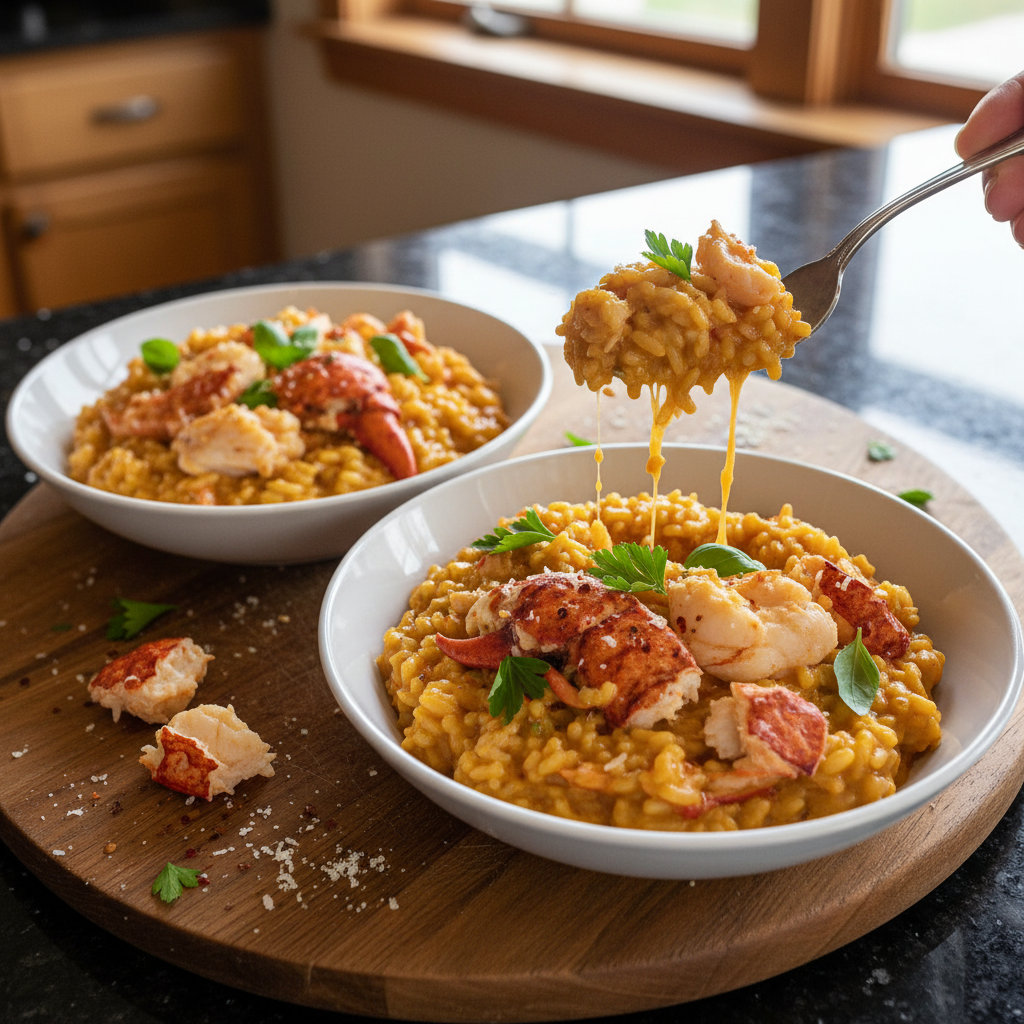
Plate the risotto and garnish with fresh parsley. Serve immediately for the best texture.
Pro Tips
- For a richer flavor, consider adding a splash of heavy cream just before serving.
Garnishing and Serving Suggestions
A simple garnish of chopped fresh parsley adds a vibrant touch to your plated risotto, but consider adding a drizzle of truffle oil for an elevated touch. Just a few drops can enhance the umami flavor and provide an indulgent aroma that pairs beautifully with the lobster.
For a complete meal, serve your lobster risotto alongside a light salad. A simple arugula salad with a lemon vinaigrette adds brightness and a refreshing contrast to the richness of the dish. Additionally, crusty bread can help soak up any extra sauce and make for a satisfying experience.
To fully embrace the restaurant experience at home, select beautiful dinnerware that compliments your meal. Serve the risotto in shallow bowls, allowing the creamy texture to be the focus, and provide a lemon wedge on the side for those who wish to add a touch of acidity.
Variations to Try
For those looking to explore flavors, try incorporating different seafood. Shrimp or scallops can be a wonderful addition or a substitute for the lobster if you prefer their flavor. Just ensure that any seafood added is cooked separately and then gently folded into the risotto at the end to prevent toughening.
If you're cooking for a vegetarian option, you can omit the lobster and replace the stock with a robust vegetable stock. Consider adding peas or asparagus towards the end of the cooking process to introduce a pop of color and additional texture without compromising the dish's creaminess.
Another creative variation is to experiment with different cheeses. While Parmesan is traditional, using a tangy goat cheese or creamy mascarpone can lead to delightful changes in flavor and texture, creating a unique risotto every time you cook.
Questions About Recipes
→ Can I use frozen lobster for this recipe?
Yes, frozen lobster meat can be used. Just ensure it's fully thawed and drained before adding it to the risotto.
→ Is there a vegetarian alternative for the stock?
Absolutely! You can substitute with vegetable stock for a lighter version of the risotto.
→ How do I know when the risotto is done?
The risotto should be creamy and the rice tender yet firm to the bite. It usually takes about 18-20 minutes of constant stirring.
→ Can leftovers be reheated?
While risotto is best served fresh, leftovers can be reheated. Add a little broth or water to help regain creaminess.
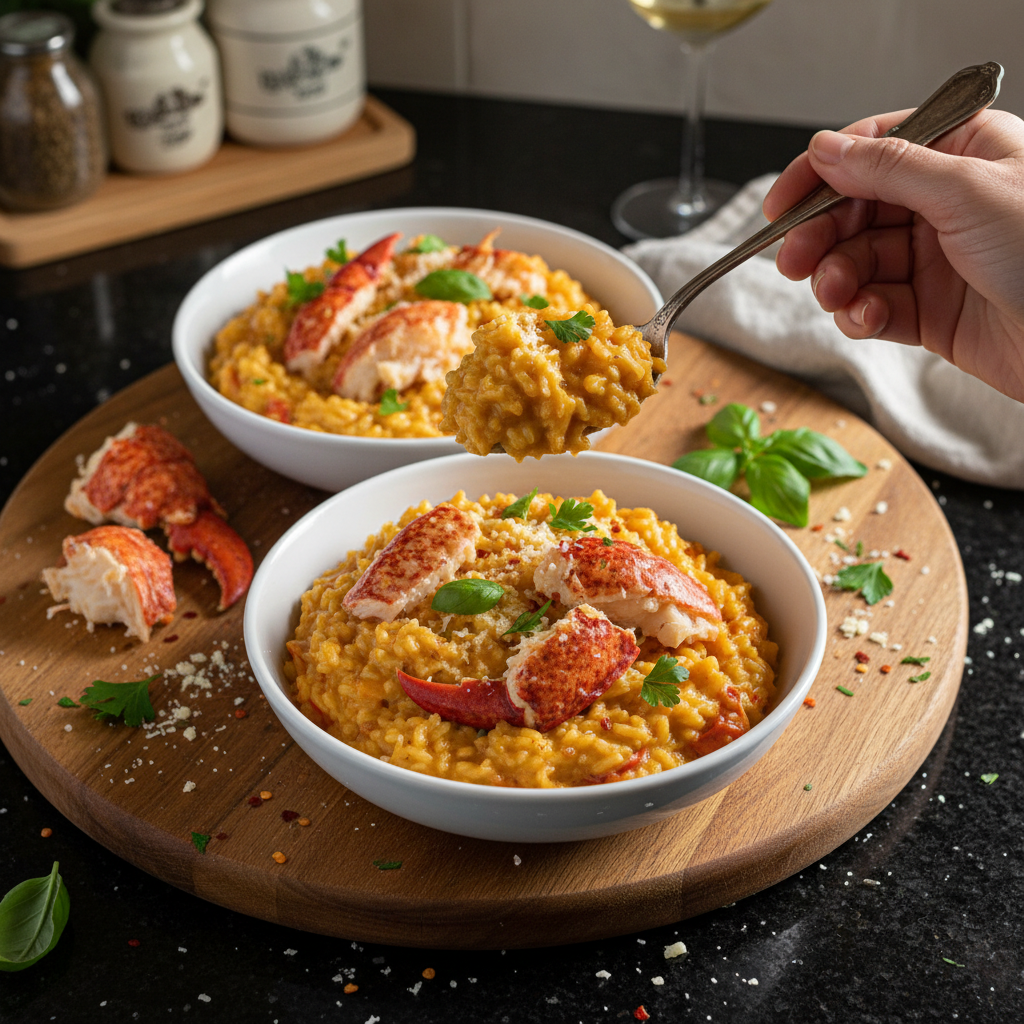
Elegant Lobster Risotto for Two
Created by: The Highlevelrecipes Team
Recipe Type: Homestyle Meals
Skill Level: Intermediate
Final Quantity: 2 servings
What You'll Need
For the Risotto
- 1 cup Arborio rice
- 2 cups lobster stock
- 1/2 cup dry white wine
- 1 small onion, finely chopped
- 1 garlic clove, minced
- 1 tablespoon olive oil
- 1 tablespoon unsalted butter
- 1/2 cup grated Parmesan cheese
- Salt and pepper to taste
- Fresh parsley, chopped, for garnish
- 1 small cooked lobster, meat removed and chopped
How-To Steps
In a saucepan, warm the lobster stock over low heat. Keep it warm as you prepare the risotto.
In a large skillet, heat olive oil and butter over medium heat. Add the onion and garlic, sauté until translucent.
Add the Arborio rice and toast it for 2-3 minutes until it becomes slightly translucent with a nutty aroma.
Pour in the white wine, stirring constantly until it’s mostly absorbed.
Begin adding the warm lobster stock, one ladle at a time, stirring frequently. Wait until the liquid is nearly absorbed before adding more.
Once the rice is al dente and creamy (about 18-20 minutes), stir in the chopped lobster, Parmesan, and season with salt and pepper.
Plate the risotto and garnish with fresh parsley. Serve immediately for the best texture.
Extra Tips
- For a richer flavor, consider adding a splash of heavy cream just before serving.
Nutritional Breakdown (Per Serving)
- Calories: 540 kcal
- Total Fat: 26g
- Saturated Fat: 12g
- Cholesterol: 80mg
- Sodium: 600mg
- Total Carbohydrates: 56g
- Dietary Fiber: 2g
- Sugars: 2g
- Protein: 18g